We engineer training and mission simulation systems for the defence sector on Unreal Engine 5:
fighter aircraft desktop trainers, unmanned and FPV environments, avionics and sensor
simulation, instructor stations and debriefing. Architected to run standalone, on a closed
network, fully offline.
Each environment is engineered around the operational question it must answer, from
familiarisation and procedure training to sensor employment, mission rehearsal and
capability demonstration.
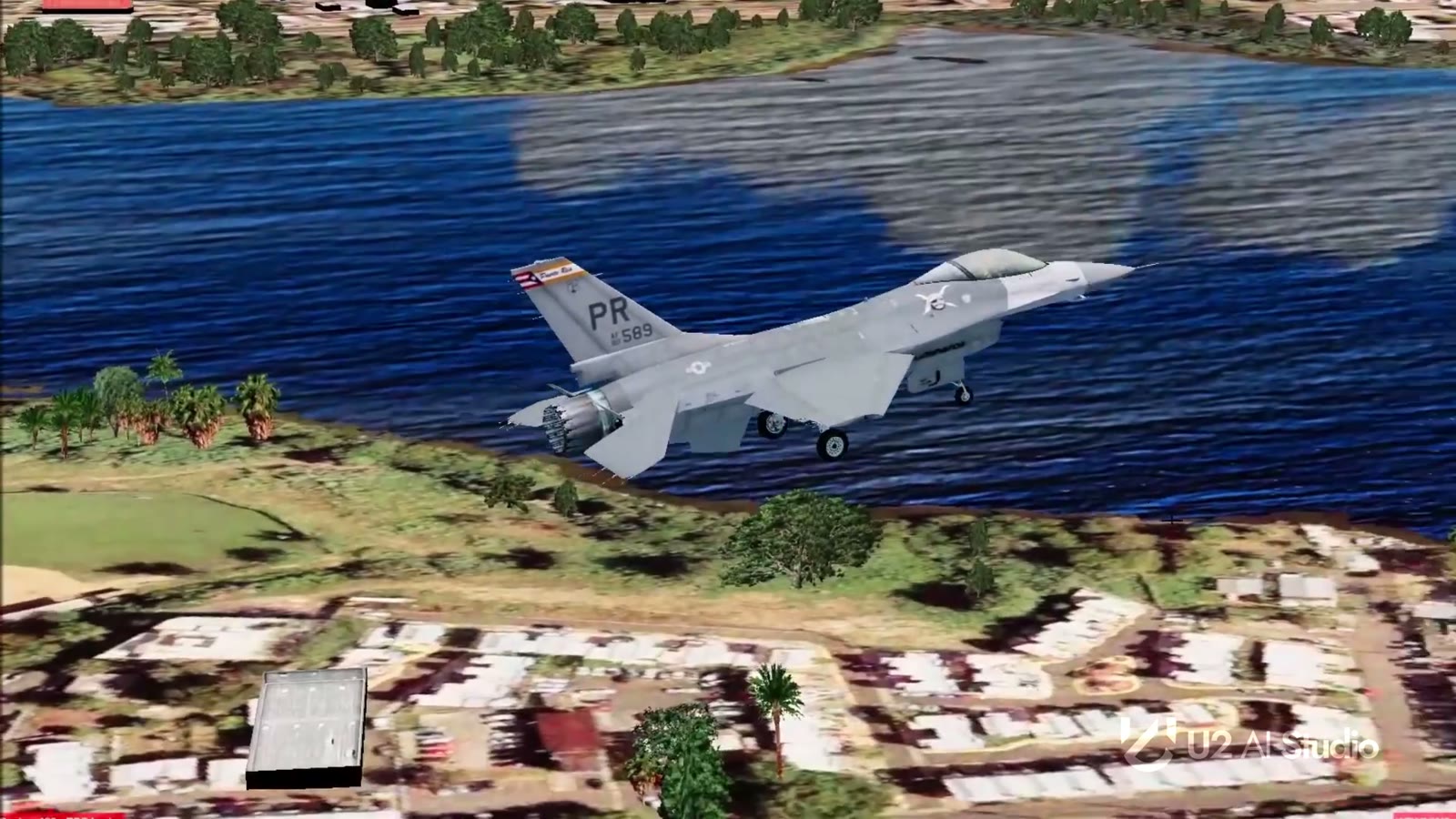
OWNSHIP · flight dynamics
01
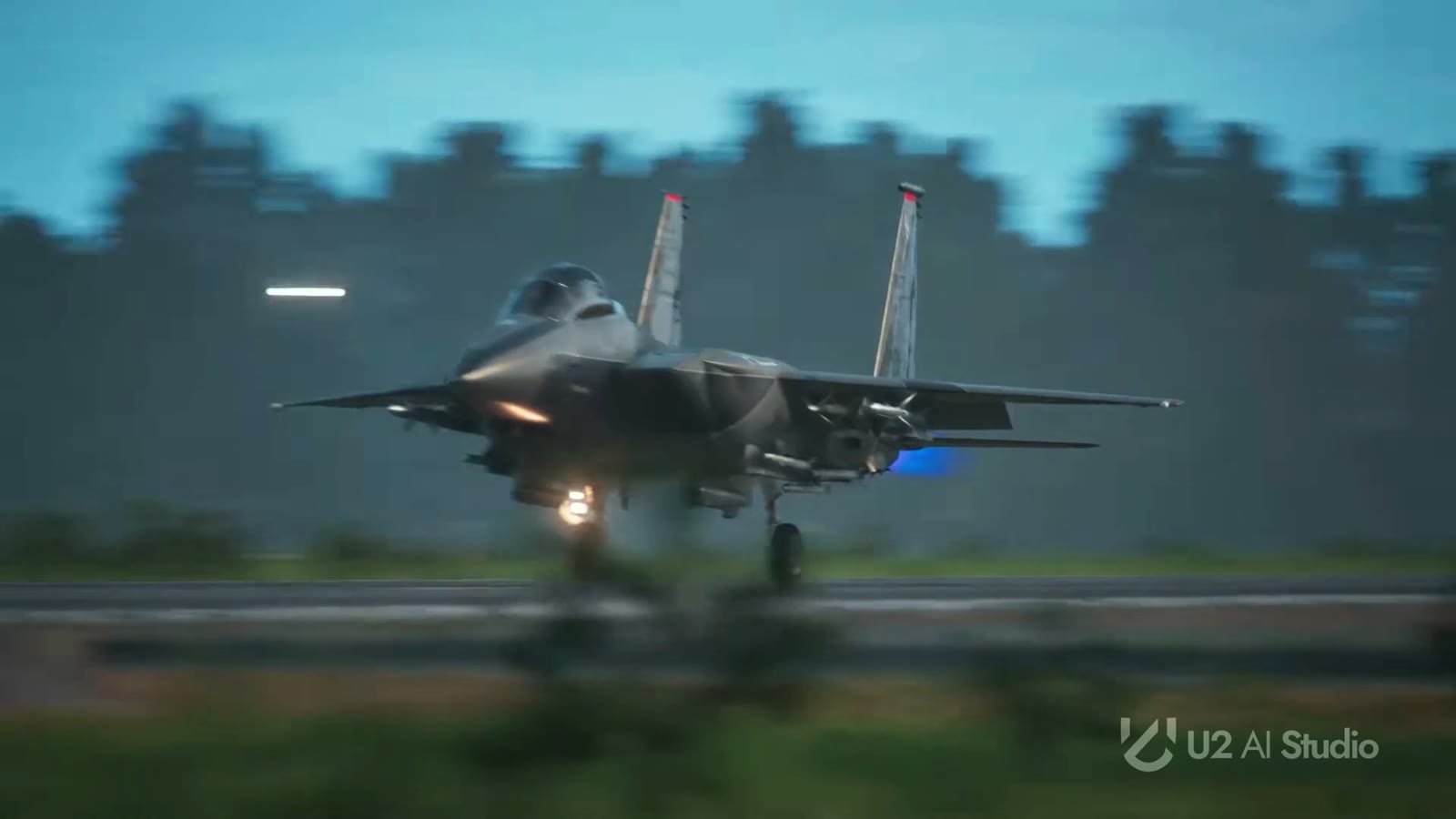
Fighter Aircraft Trainers
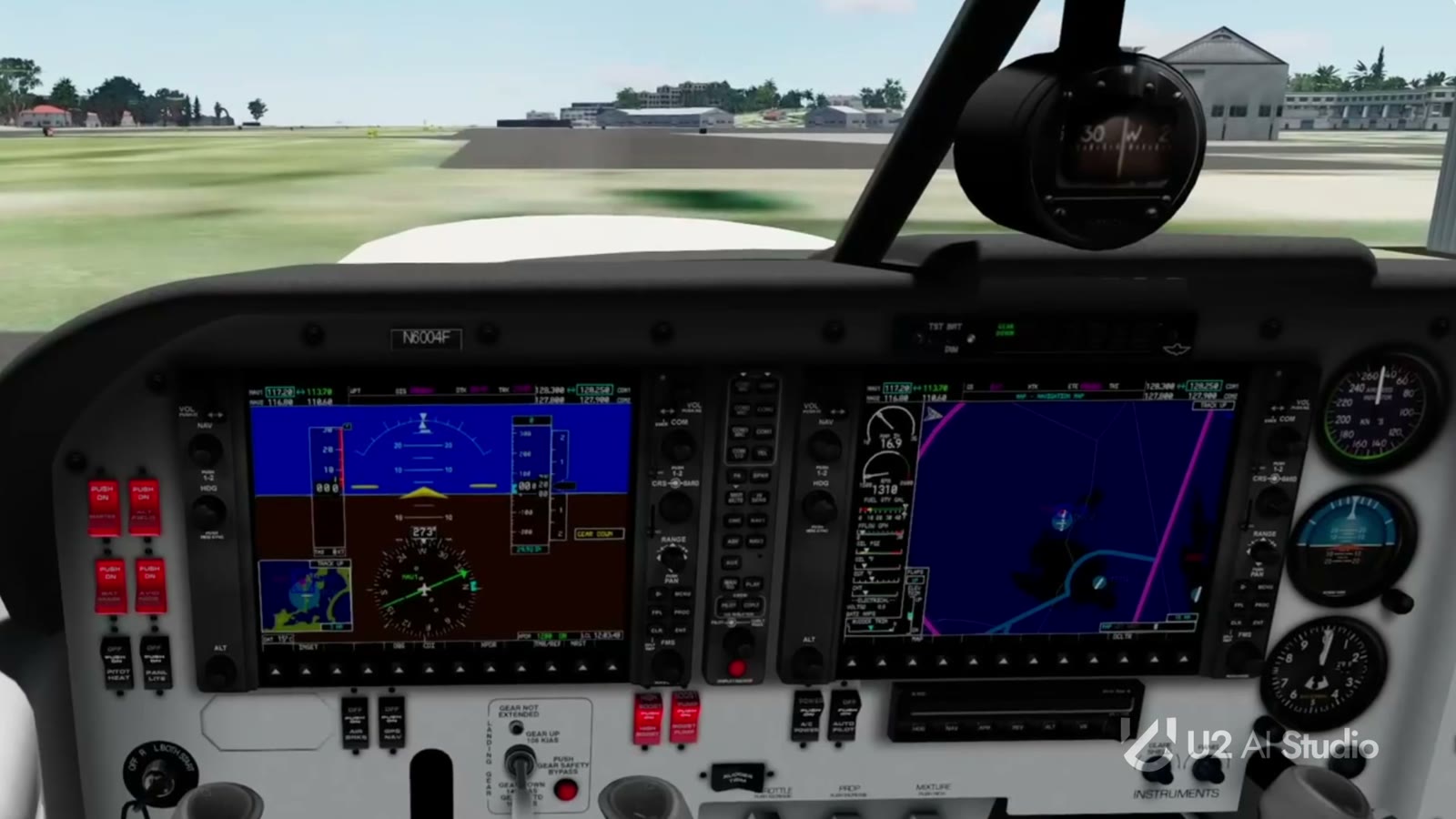
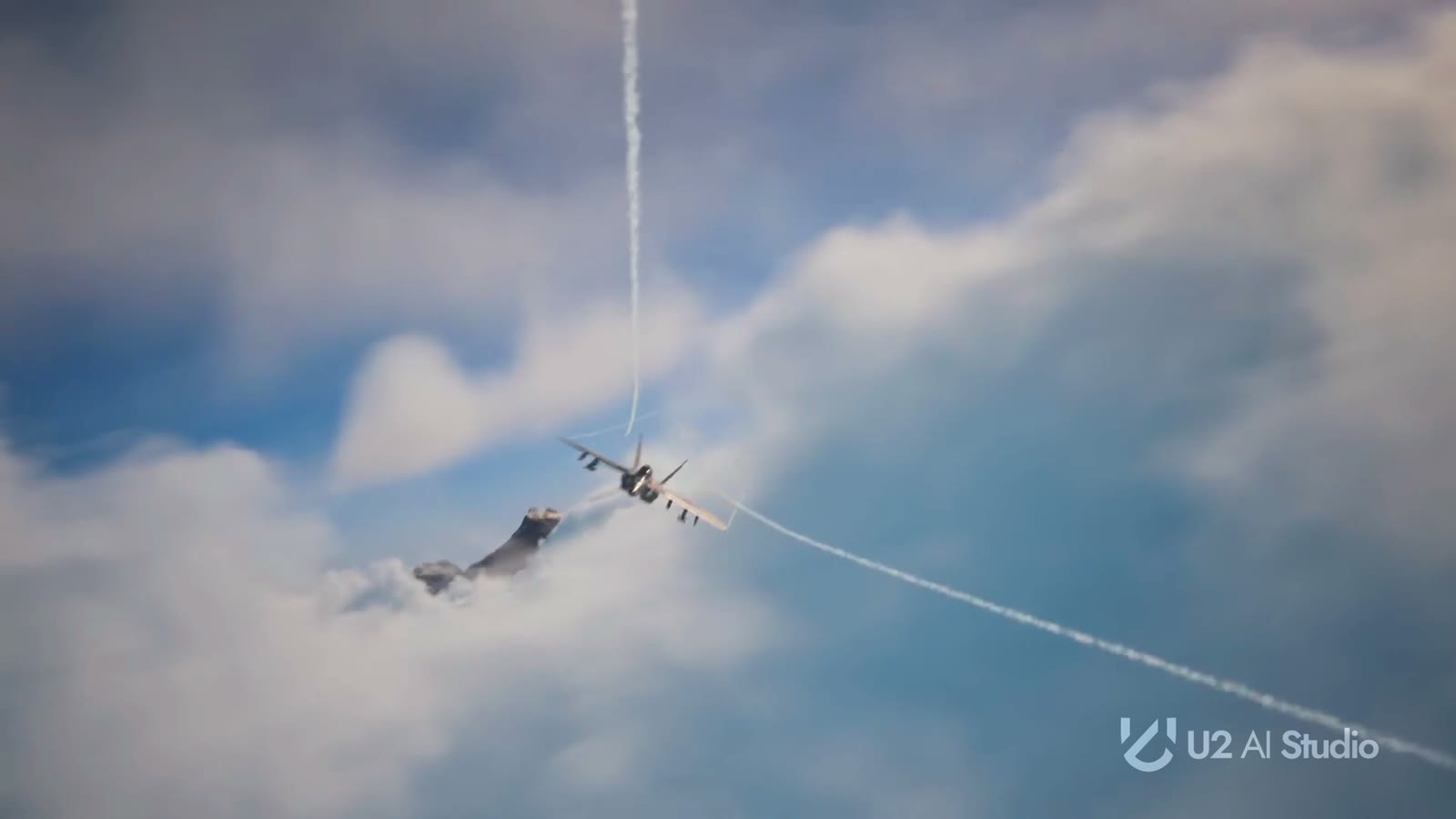
Desktop-first fixed-wing trainers covering cockpit interaction, flight behaviour, system
familiarisation and scenario-based tactical training. Flight dynamics are implemented as a
purpose-built C++ layer inside the engine: configurable, tunable with subject-matter experts,
and free of third-party simulation licences.
Cockpit & PVI
Custom C++ FDM
Procedure training
Mission rehearsal
UAV · mission profile
02
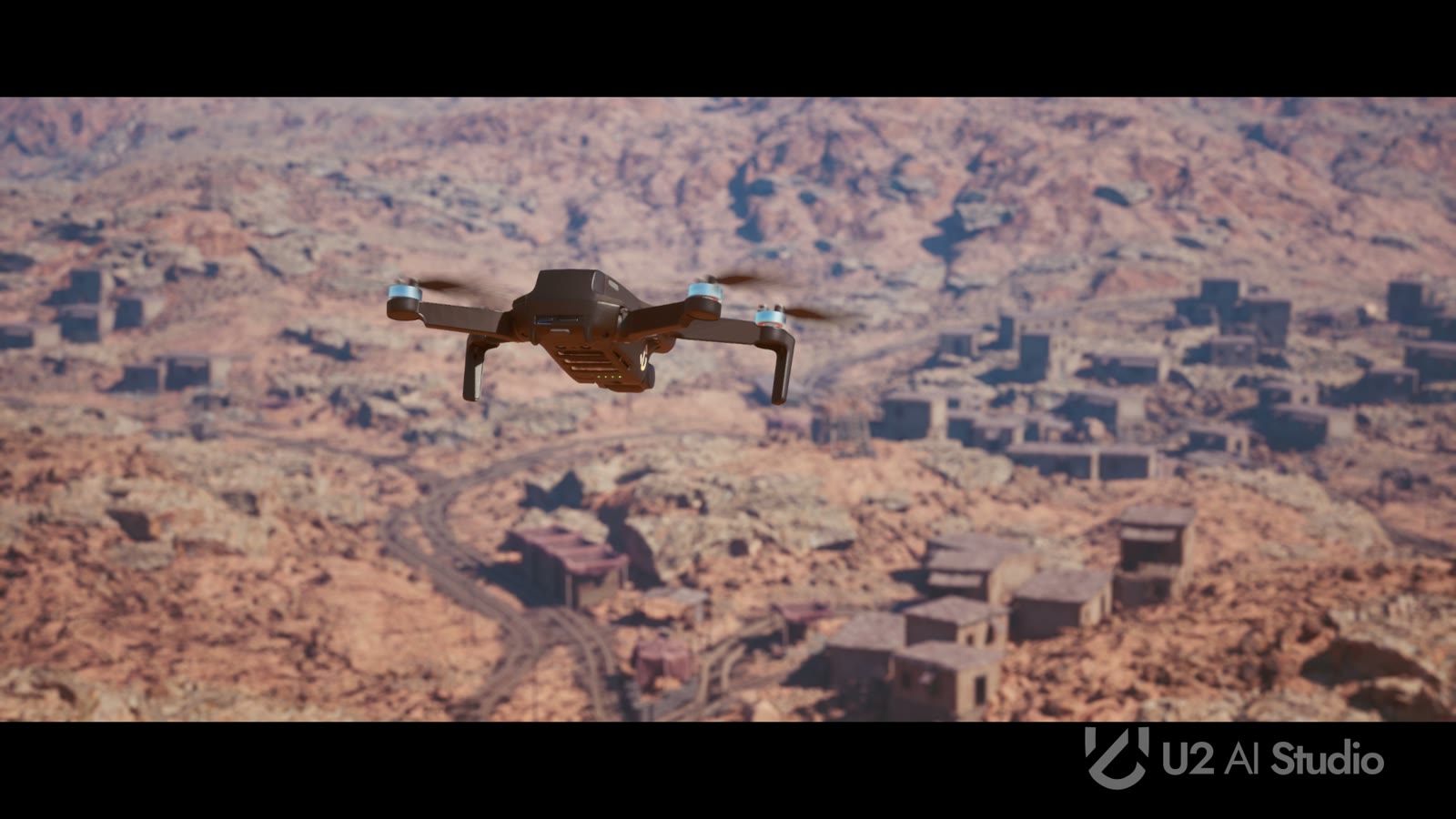
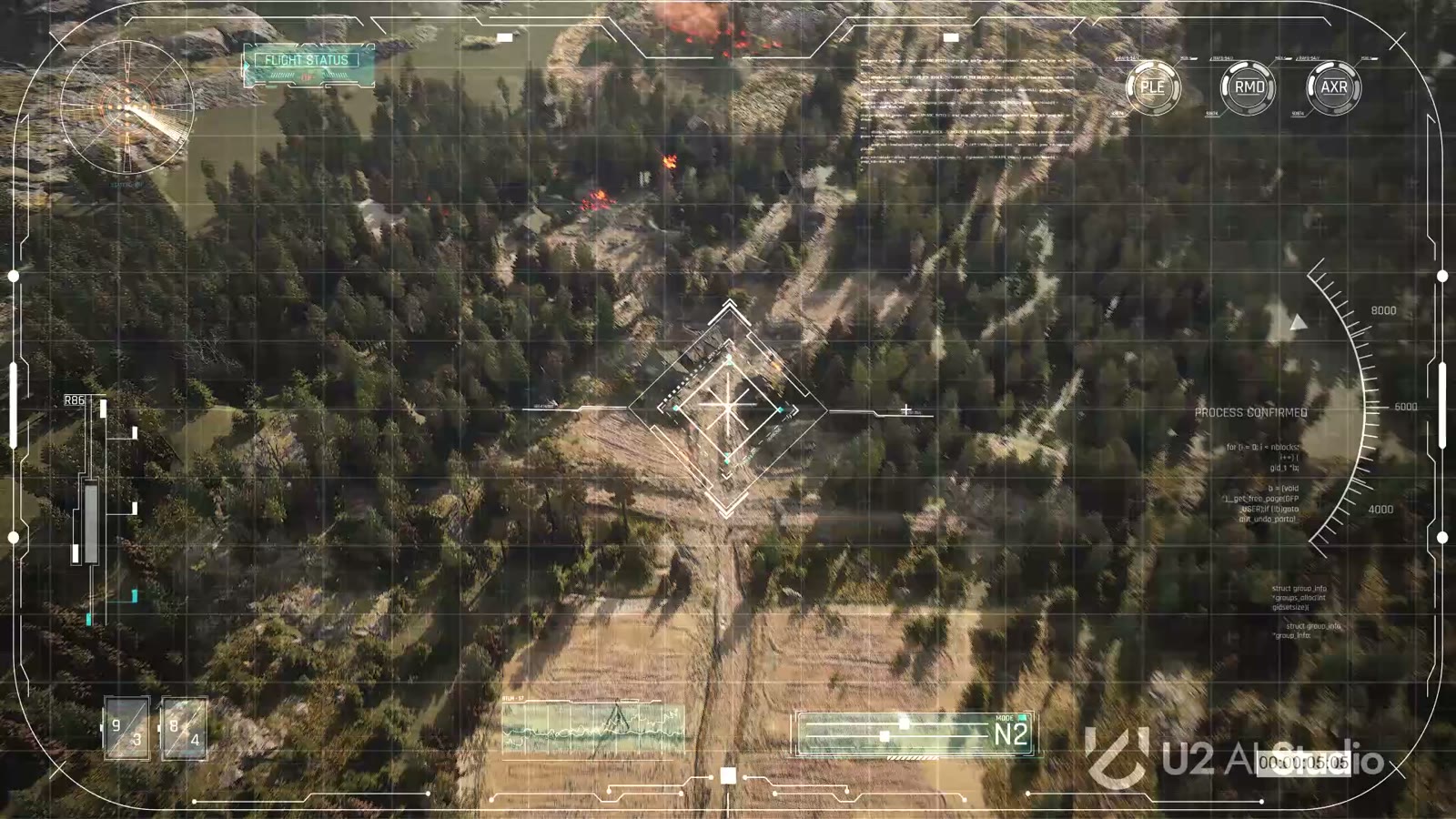
UAV & Unmanned Systems
Operational environments for unmanned aerial platforms: ground control interaction, payload
and sensor representation, and mission profiles rehearsed against realistic terrain, weather
and time-of-day conditions.
Ground control
Payload & sensors
Mission profiles
Terrain
FPV · scored training run
03
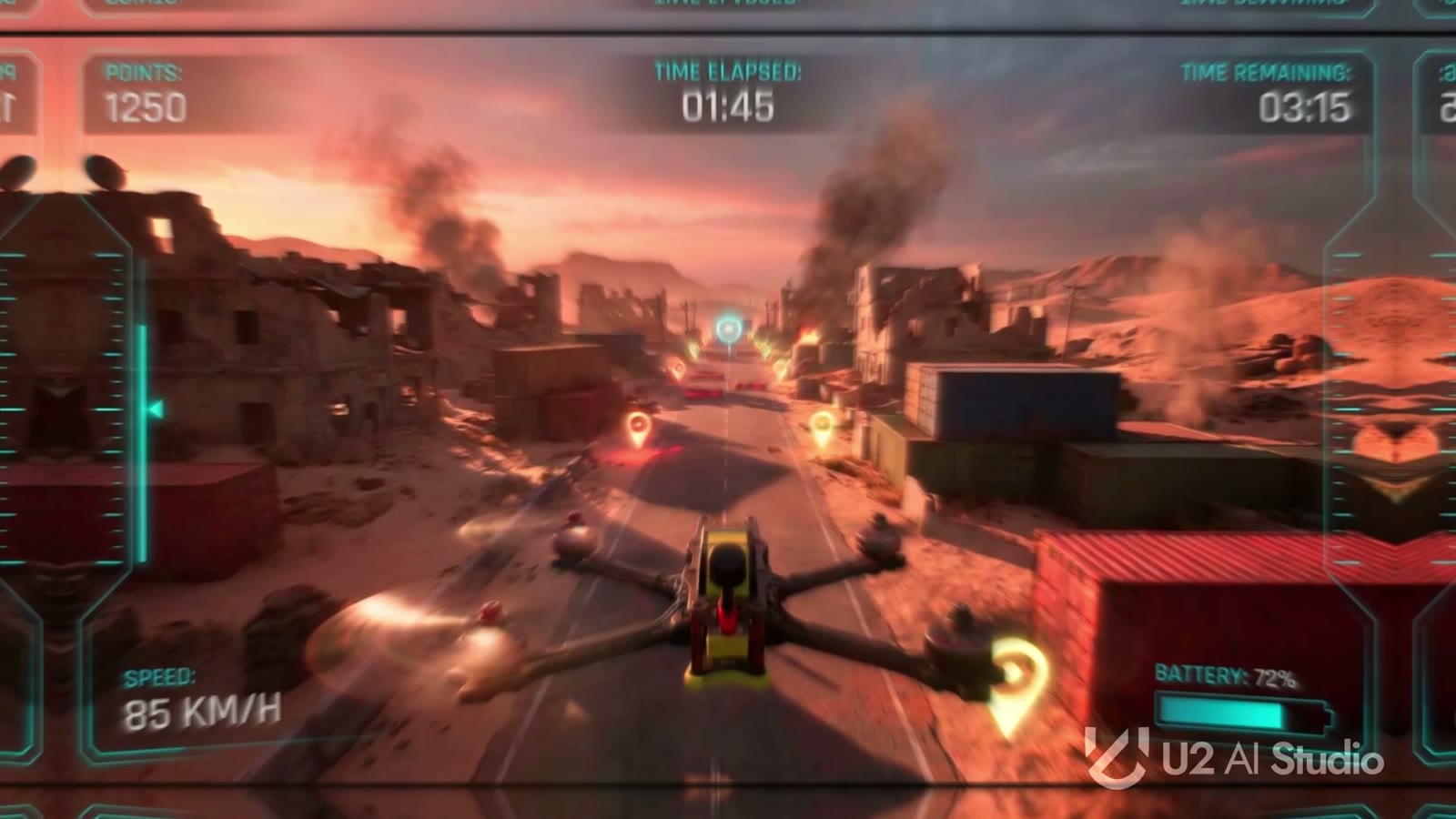
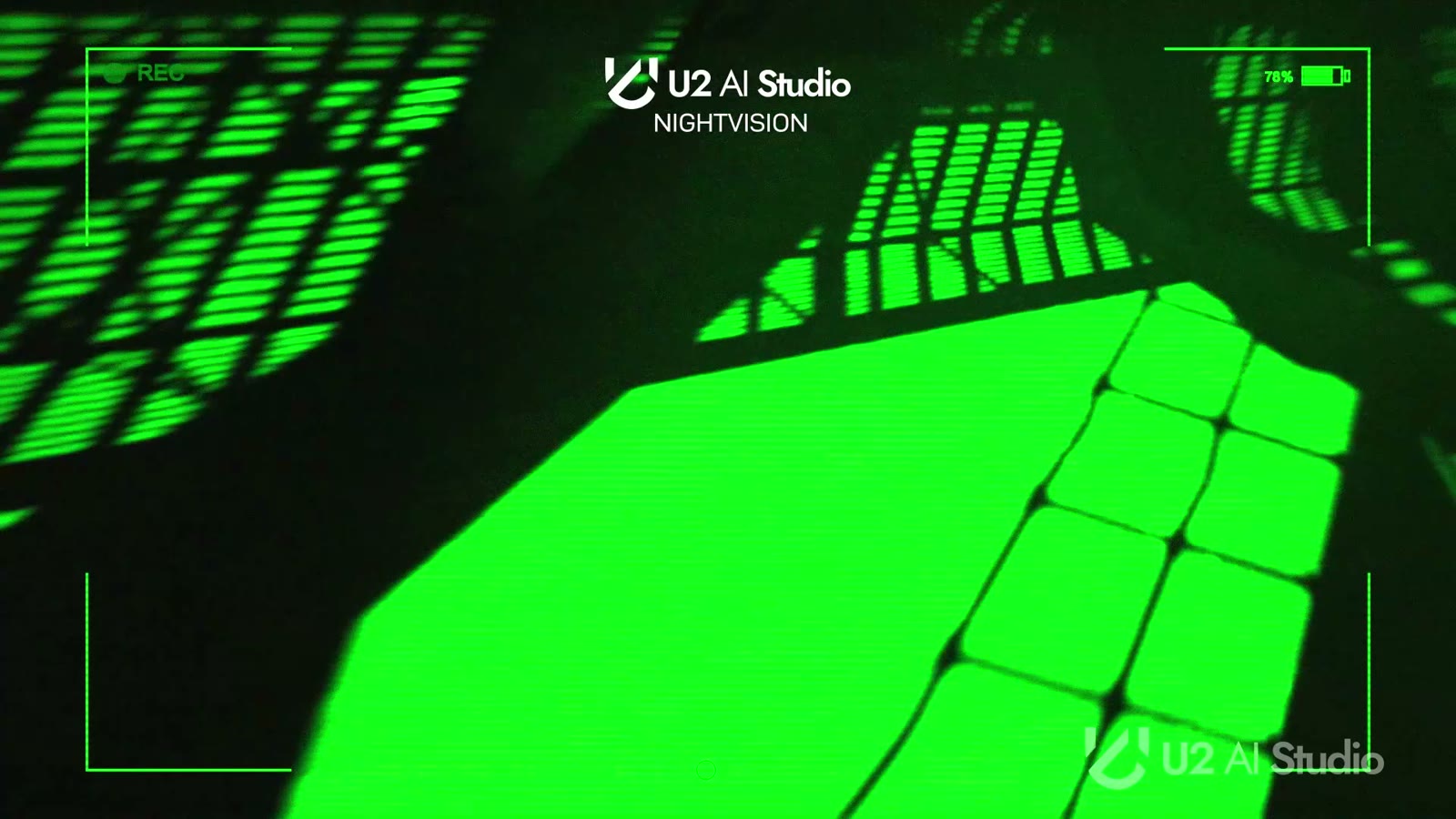
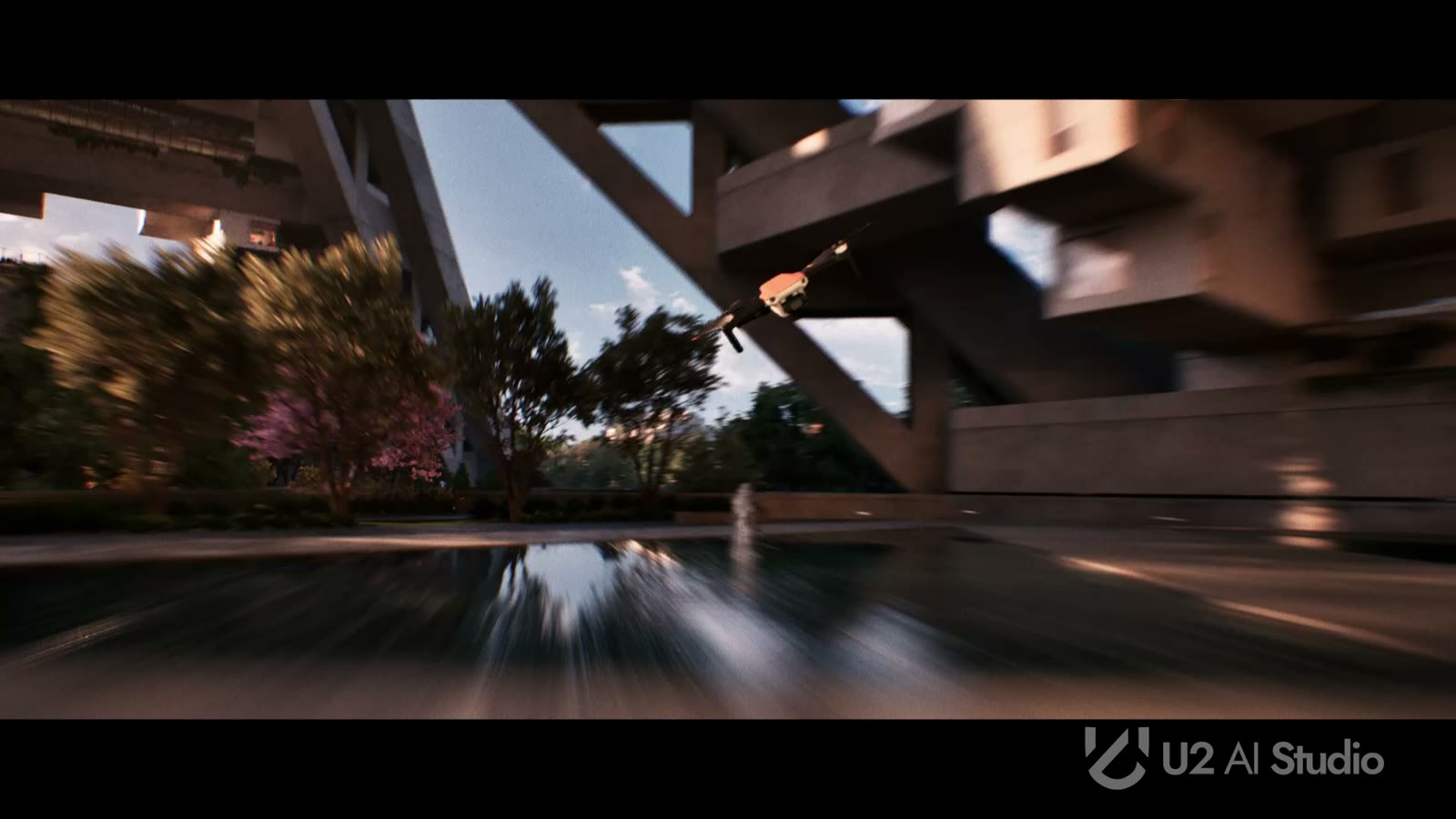
FPV Drone Operations
First-person-view environments for operator training and evaluation: gated courses, scoring,
elapsed and remaining time, speed, altitude and battery state. Low-latency interaction and
repeatable scenarios, so operators build and demonstrate skill before airframes are committed.
Operator training
Scoring & telemetry
Night vision
Repeatable runs
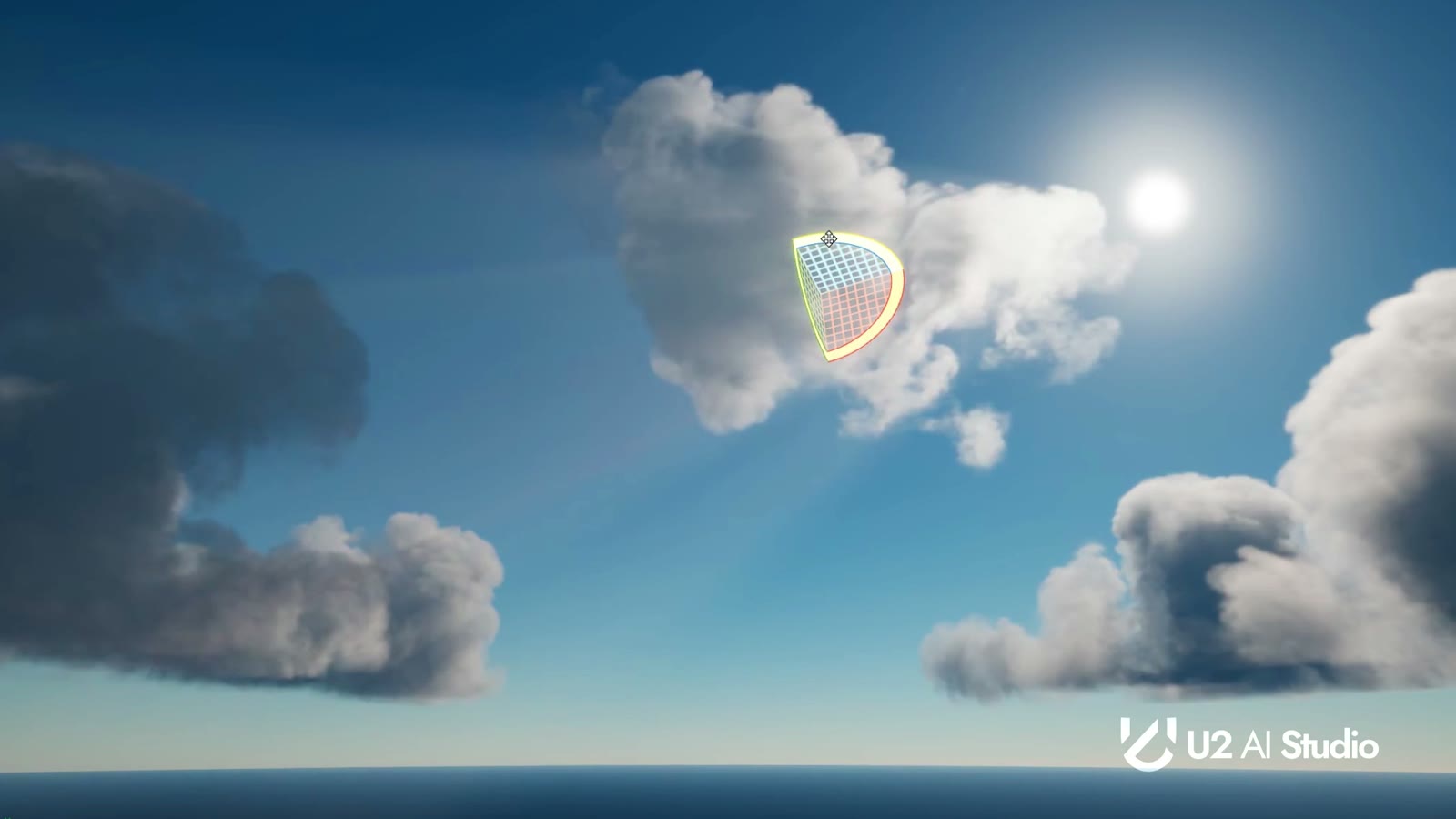
ASSETS · photoreal terrain & environments
04
3D Asset Production & AI
Photoreal platform models, airfields, air-defence systems, environments and effects produced
in Blender, Cinema 4D and the Adobe suite, accelerated by AI-assisted workflows for
texturing, iteration and content generation at programme scale.
Wide-area display pages, HUD and helmet-mounted symbology are built as a display framework
rather than one-off screens, so pages can be added, re-laid out and retuned as the
programme matures. Interaction is bound to HOTAS axes and key combinations, with per-pilot
binding profiles.
Sensor models are parametric and functionally faithful rather than physics-exhaustive:
the behaviour a crew must learn, without the cost and risk of full RF modelling.
R
AESA Radar
Line-of-sight detection, terrain masking, radar modes and a parametric track lifecycle.
E
EO / IR
Post-process imaging with correct WHOT and BHOT polarity for targeting and observation.
W
EW / RWR
Threat warning and situational awareness logic; emitter and alert modelling.
Contributions are presented as a single fused tactical
picture, and weapon employment is modelled through a stores management layer:
selection, munition envelopes, release logic and symbology.
System Architecture
Engine-independent at the core.
Presentation is separated from simulation logic, and simulation logic from the rendering
engine. Every subsystem reads and writes one shared state layer, so the same logic runs
unchanged on desktop and in VR, and remains portable if the renderer ever changes.
Engine-independent real-time state & event bus shared by every module
C · Subsystems
Flight Dynamics
C++ FDM · physics
Sensors
Radar LoS · EO/IR · RWR
Weapons & SMS
Envelope · symbology
CGF & AI
Personas · behaviour trees
Scenario & Events
Triggers · failures · save/load
Recording
Event log · replay
D · Platform
Input & HOTAS
Plug-and-play · profiles
UE5 Render
Lumen · Nanite · LWC
Data, Config & SDK
Plugin · data-driven definition
◇ Work Packages
Offline World Terrain
WGS-84 · LOD · packaged, no streaming server
VR / OpenXR
Same simulation state, VR usage mode
Training, Instruction & Assessment
The instructor drives the training, not the build.
The instructor station is not separate software; it lives inside the same application and runs
without any network connection. Scenarios, procedures and assessment are content the customer
can grow, not code they have to commission.
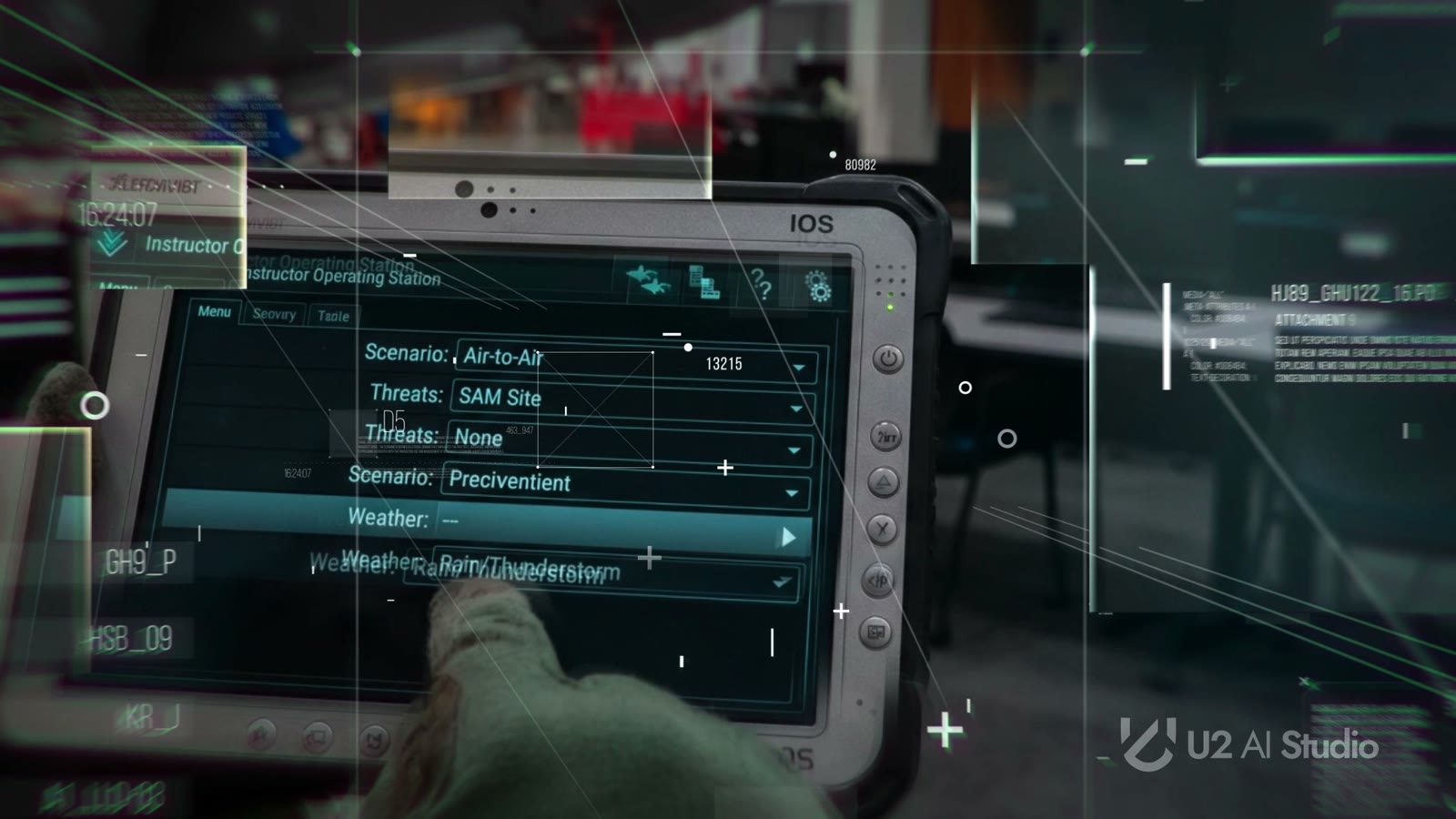
IOS · scenario, threats & weather
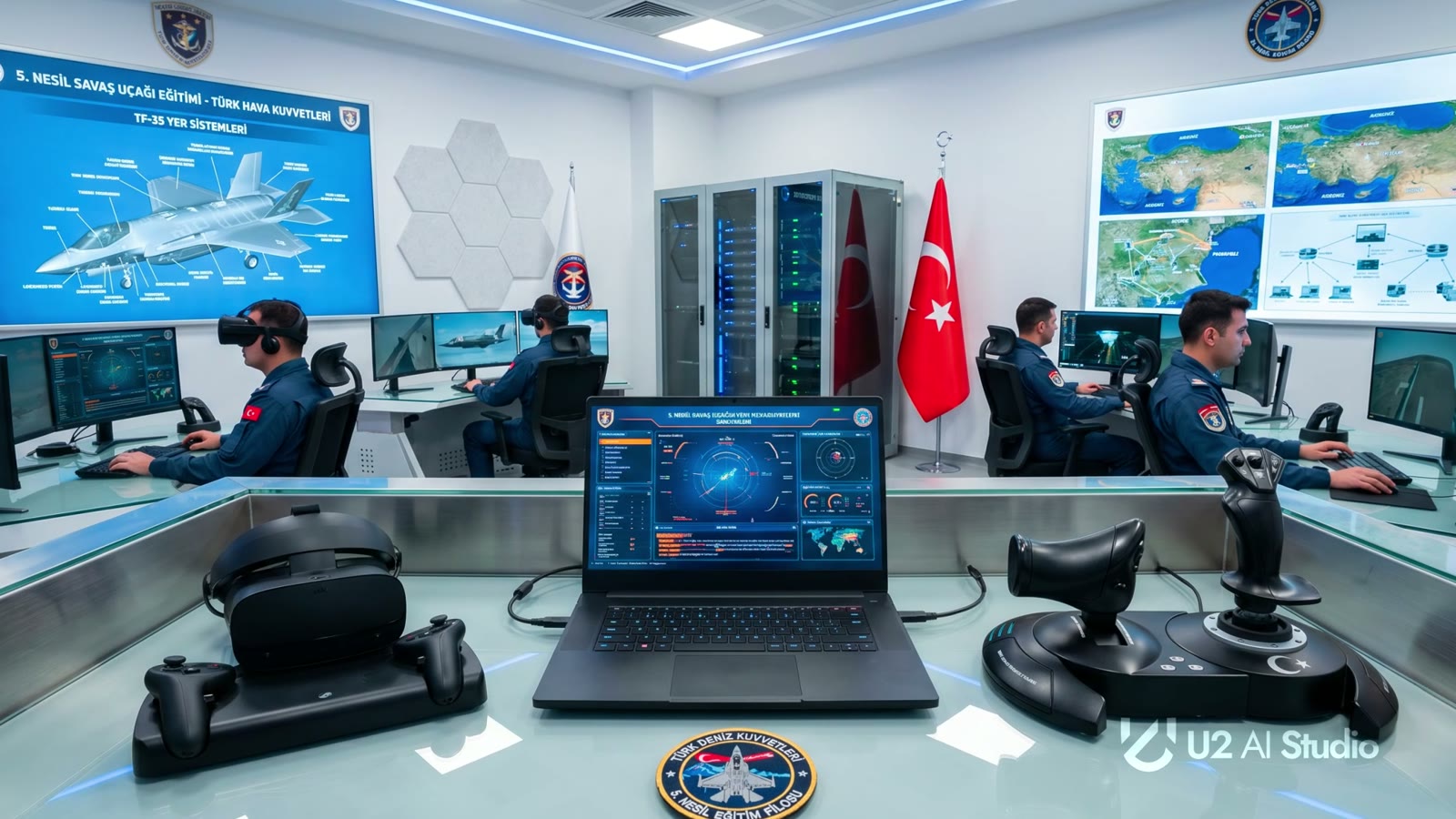
STATIONS · desktop, HOTAS & VR
Instructor Operating Station
Live control of the training environment while the student flies.
Scenario selection and start conditions
Weather, visibility and time-of-day control
Entity placement on the map
Failure injection with real aerodynamic and sensor consequences
Save, reload and resume a scenario in place
Scenario & Procedure Content
Structured training packages rather than one-off missions.
Familiarisation, handling, takeoff and landing
Navigation, envelope awareness, weather
Radar, EO/IR, RWR and fused tactical picture
Air-to-air and air-to-ground employment
Normal and emergency procedure catalogues
Debriefing & Computer-Generated Forces
What happened, why, and against whom.
Full session recording and replay
Event log, error analysis and repeat comparison
Rule-based AI personas: aggressive, passive, defensive
Entities act on their own sensor picture, not absolute truth
Delivery & Assurance
Built to be handed over, not licensed back.
Defence programmes outlive vendors. What we deliver is engineered so the customer owns the
capability outright: source, documentation and the ability to extend it without returning to us.
Ownership
Turnkey delivery with source code and full intellectual property transfer. No licensing model, no revenue share, and no runtime dependency on a proprietary simulation platform.
Documentation & Configuration
A complete document set produced alongside the build: requirements, design, interface, test and plan documentation, plus a user manual.
SyRS · SRS · SDD · SWDD · IDD
ATP · QTP test procedures
PMP · SEP · SDP · TEMP · QP · CMP
Version control, baselines and a traceability matrix
Quality & Acceptance
Every phase opens and closes against written entry and exit criteria, agreed before work starts.
Unit, integration and functional testing
State-scenario and performance testing on target hardware
Fidelity matrix agreed with users and subject-matter experts
Phase-gate reviews and change control
Programme Approach
From requirement to running environment.
PHASE 0
Define
Requirements, fidelity matrix and phase-based acceptance criteria are written down and agreed before development begins.
PHASE 1
Vertical Slice
An end-to-end runnable build early: basic flight, input, a working sensor path, so performance and risk are measured, not assumed.
PHASE 2–4
Build & Integrate
Flight dynamics, displays, instructor station, scenario logic, sensors, weapons and computer-generated forces are layered in against phase gates.
PHASE 5
Harden & Hand Over
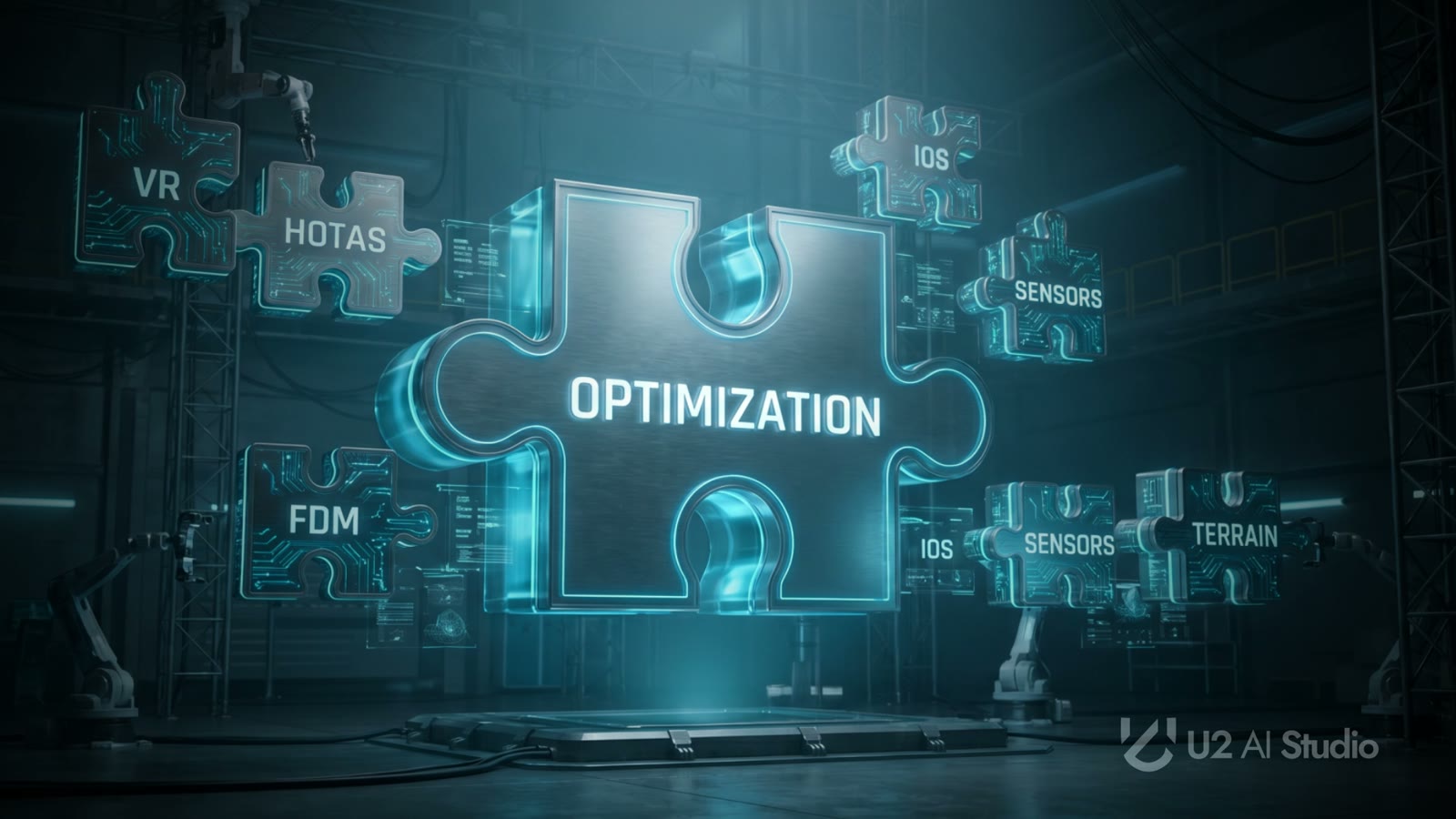
Platform-specific maturation, optimisation, acceptance testing, user training, source code and documentation handover.
Contact
Tell us what the simulation needs to prove.
Share the platform, the scenario and the audience. We will come back with a view on approach,
fidelity level and what a first runnable build should cover.
All product names, logos, and brands are property of their respective owners and are used for identification purposes only.
Part of the visual and text content on this site was produced with artificial intelligence.
Privacy Policy
U2 AI Studio Teknoloji A.Ş. · Last updated: August 2026
1. Data Controller
U2 AI Studio Teknoloji Anonim Şirketi ("U2 AI Studio", "we") is the data controller for personal
data processed through this website. U2 Defence is a business division of U2 AI Studio and is not a
separate legal entity. Registered office: Ahi Evran OSB Mah. Erkunt Cad. No: 3 İç Kapı No: 41, Sincan / Ankara, Türkiye; Ankara Trade Registry Office no. 434199; MERSİS 0883124471000001; tax office and number Sincan V.D. 8831244710; phone +90 850 346 82 82. You can reach us at
[email protected].
2. What We Collect
This website is a static informational site. It contains no accounts, no forms and no user
tracking. We process personal data only in two situations:
Correspondence you initiate. If you email or call us, we process the contact
details and content you choose to send: typically your name, organisation, email address,
telephone number and the substance of your enquiry.
Technical logs. Our hosting and security provider records standard request
data (IP address, timestamp, user agent, requested URL) to deliver the site and protect it
against abuse.
3. Purposes and Legal Basis
Correspondence data is processed to respond to your enquiry, to evaluate a possible business
relationship and to keep a record of pre-contractual discussions. Technical logs are processed for
network and information security. The legal bases are the performance of, or steps prior to, a
contract, and our legitimate interest in operating and securing our website.
4. Confidentiality of Enquiries
Enquiries relating to defence programmes are treated as commercially sensitive. Access is
limited to personnel with a need to know. We are willing to sign a non-disclosure agreement before
any substantive technical discussion.
5. Retention
Enquiry correspondence: retained while the opportunity is live and for a reasonable period
afterwards, then deleted or archived under our records policy.
Technical logs: retained for a short period as configured by our hosting provider, for
security purposes only.
Where Turkish commercial or tax law prescribes a longer statutory retention period for
contractual records, that period applies.
6. Sharing and Transfers
We do not sell personal data. Data may be processed by our hosting, security and email service
providers acting on our instructions. Where a provider operates outside Türkiye, transfers are made
on the basis of appropriate safeguards. We disclose data to public authorities only where legally
required.
7. Security
The site is served over TLS. Access to correspondence is restricted, and we apply the security
and cyber-hygiene practices appropriate to defence-sector work.
8. Your Rights
Subject to applicable law, including Turkish Law No. 6698 (KVKK) and, where relevant, the EU
GDPR, you may request access to your personal data, correction of inaccurate data, erasure,
restriction, objection to processing, and information about recipients. See the KVKK notice for the
statutory route under Turkish law. Requests can be sent to
[email protected].
9. Changes
We may update this policy as our processing changes. The date at the top of this notice
indicates the current version.
Terms of Use
U2 AI Studio Teknoloji A.Ş. · Last updated: August 2026
1. Scope
These terms govern your use of this website, operated by U2 AI Studio Teknoloji Anonim Şirketi.
U2 Defence is a business division of U2 AI Studio and is not a separate legal entity. By using the
site you accept these terms.
2. Purpose of the Content
The content describes engineering capabilities and general technical approach. It is provided
for information only. It is not an offer, a quotation, a specification, a warranty of performance,
or a commitment to deliver any particular system, timeline or fidelity level. Any binding scope,
price and schedule arise only from a signed written contract.
3. Confidentiality of Third-Party Programmes
No customer, programme or platform is identified on this site. Imagery and descriptions are
generic or drawn from our own development and demonstration material. Nothing here should be read
as confirming the existence, scope or status of any specific customer engagement.
4. Intellectual Property
All content on this site, including text, layout, graphics, imagery, video, source markup and
the U2 Defence and U2 AI Studio names and logos, is owned by U2 AI Studio or its licensors. You
may view and print pages for your own internal evaluation. Any other reproduction, distribution,
modification or commercial use requires our prior written consent.
5. No Warranty
The site is provided "as is". We make no warranty that it will be uninterrupted, error-free or
free of harmful components, and we do not warrant the accuracy or completeness of the content.
6. Limitation of Liability
To the fullest extent permitted by law, U2 AI Studio is not liable for indirect, incidental or
consequential loss, or for loss of profit, revenue, data or business opportunity, arising from use
of or reliance on this site. Liability for intent and gross negligence under Article 115 of the Turkish Code of Obligations No. 6098, and any mandatory provision of Turkish law that cannot be excluded, are reserved.
7. External Links
Links to third-party sites are provided for convenience. We do not control and are not
responsible for their content or practices.
8. Export and Compliance
Defence-related engagements may be subject to export control, licensing and national security
requirements. Any engagement is conditional on compliance with the applicable legislation of the
Republic of Türkiye and any other law that applies to the parties.
9. Governing Law and Jurisdiction
These terms are governed by the laws of the Republic of Türkiye. The Ankara Courts and
Enforcement Offices have exclusive jurisdiction over any dispute arising from them.
Personal Data Protection Law No. 6698 (Türkiye) · Last updated: August 2026
This notice is provided under Article 10 of Turkish Personal Data Protection Law No. 6698
("KVKK"), which sets out the data controller's duty to inform.
1. Data Controller
U2 AI Studio Teknoloji Anonim Şirketi, registered at Ahi Evran OSB Mah. Erkunt Cad. No: 3, İç Kapı No: 41, Sincan / Ankara, Türkiye, acts as data controller (veri sorumlusu).
U2 Defence is a business division of the same legal entity.
2. Personal Data Processed
Identity and contact data you provide when contacting us (name, organisation, role, email,
telephone).
The content of your correspondence.
Transaction security data (IP address, request logs) generated when you visit the site.
3. Purposes of Processing
Responding to enquiries; conducting pre-contractual negotiations and business development;
fulfilling contractual and legal obligations; and ensuring the security of our information systems.
4. Legal Grounds
Processing is carried out under Article 5 of the KVKK, in particular: it is directly related to
the conclusion or performance of a contract; it is mandatory for the data controller to fulfil its
legal obligations; and it is necessary for the legitimate interests of the data controller,
provided this does not harm your fundamental rights and freedoms.
5. Method of Collection
Data is collected electronically and partly automatically, through email and telephone
correspondence you initiate, and through server logs generated when the site is accessed.
6. Transfers
Data may be shared with our hosting, security and electronic communication service providers to
the extent necessary to operate the site and respond to you, and with public authorities where
legally required. Transfers abroad are made in accordance with Articles 8 and 9 of the KVKK. Font delivery uses Google Fonts; when pages load, your IP address is transmitted to Google to deliver the font files.
7. Retention
Enquiry correspondence is retained while the opportunity is live and for a reasonable period afterwards, then deleted or archived under our records policy. Records that must be retained under the Turkish Code of Obligations or tax legislation are kept for the statutory period; at the end of the period they are erased, destroyed or anonymised under Article 7 of the KVKK.
8. Your Rights under Article 11
You have the right to: learn whether your personal data is processed; request information on
processing; learn the purpose of processing and whether the data is used accordingly; know the
third parties to whom data is transferred at home or abroad; request correction of incomplete or
inaccurate data; request erasure or destruction under Article 7; request that any correction,
erasure or destruction be notified to third parties to whom data was transferred; object to a
result produced solely by automated analysis that is to your detriment; and claim compensation for
damage arising from unlawful processing.
9. Exercising Your Rights
Applications may be submitted in writing to the registered address above, or electronically to
[email protected], or via registered electronic mail to
[email protected]. We respond within thirty days
at the latest, in line with the Communiqué on the Procedures and Principles of Application to the
Data Controller.
Under Article 5 of the Communiqué, an application may also be made using a secure electronic signature, using a mobile signature, or from an e-mail address you have previously notified to us and that is registered in our system. Your request is concluded free of charge; where the process requires an additional cost, the fee in the tariff set by the Board may be charged (Article 13 of the KVKK). If your application is rejected, the response is insufficient or no response is given in time, you may complain to the Personal Data Protection Board within thirty days of learning the response and in any case within sixty days of the application date (Article 14 of the KVKK).
Cookie Policy
U2 AI Studio Teknoloji A.Ş. · Last updated: August 2026
1. Summary
This is a static website. We do not use advertising cookies, analytics cookies, social media pixels, profiling or cross-site tracking of any kind. Visit statistics are collected with Cloudflare Web Analytics, which sets no cookies, stores no identifier in your browser and does not track you across sites or sessions. An information notice is shown on your first visit; because no consent is required for what this site stores, it is informational with a single dismiss button, and your dismissal is stored in your browser's local storage, not in a cookie. Fonts are served by Google Fonts; when pages load, your IP address is transmitted to Google to deliver the font files.
2. What May Be Set
Strictly necessary security cookies. Our content delivery and security
provider may set short-lived cookies to distinguish human visitors from automated traffic and to
protect the site against abuse. These are essential to delivering the site securely and are not
used to profile you.
No preference or analytics cookies. The site stores no settings and measures
no visitor behaviour.
3. Local Storage
Your dismissal is kept in your browser's local storage under the key u2-cookie-consent, so the notice is not shown again on this device. Nothing else is written to local or session storage, and this record never leaves your browser.
4. Managing Cookies
You can block or delete cookies through your browser settings. Because only strictly necessary
security cookies may be used, blocking them can prevent the site from loading correctly, but no
functionality dependent on your personal data will be lost.
5. Third-Party Content
The site embeds no third-party players, fonts, maps, chat widgets or advertising scripts. All
assets are served from our own domain.
This site sets no cookies of its own. Your language choice is kept in your browser's local storage, and our infrastructure provider may set a technical cookie for security; neither requires your consent. No analytics or advertising cookies; visit statistics are collected without cookies.
 OWNSHIP · flight dynamics